Overview
Horizon Point Station is the tutorial level for The Outer Worlds 2. It is a high-security secret facility built on a small moon orbiting the rings of Nyx. The player takes on the role of an Earth Directorate Agent (Space Marshal) leading a mission to infiltrate the Protectorate Research Facility. However, during the mission things do not go as planned, leading the player to improvise and choose a new route. While each route caters to a different playstyle, the player will ultimately be funneled back to the critical path to experience the loss of an agent, and betrayal at the hands of another.
I was responsible for multiple POIs throughout the level and all of the connective tissue in-between (gameplay space between POIs). I conceived of and fully developed Central Dispatch (Combat POI) to ship. I brought Security Ops (Stealth POI) up from functional to shippable quality, and reworked the layout of the level’s pathing between POIs to be more streamlined in order to hit leadership’s goals of reducing tutorial length. All gameplay events, cinematic transitions, interactions, and combat encounters up until Skip Labs were created and implemented by me, barring our standard interactables (doors, engineering panel, wire panel, switches) and combatant systems & AI.
Horizon Point Station
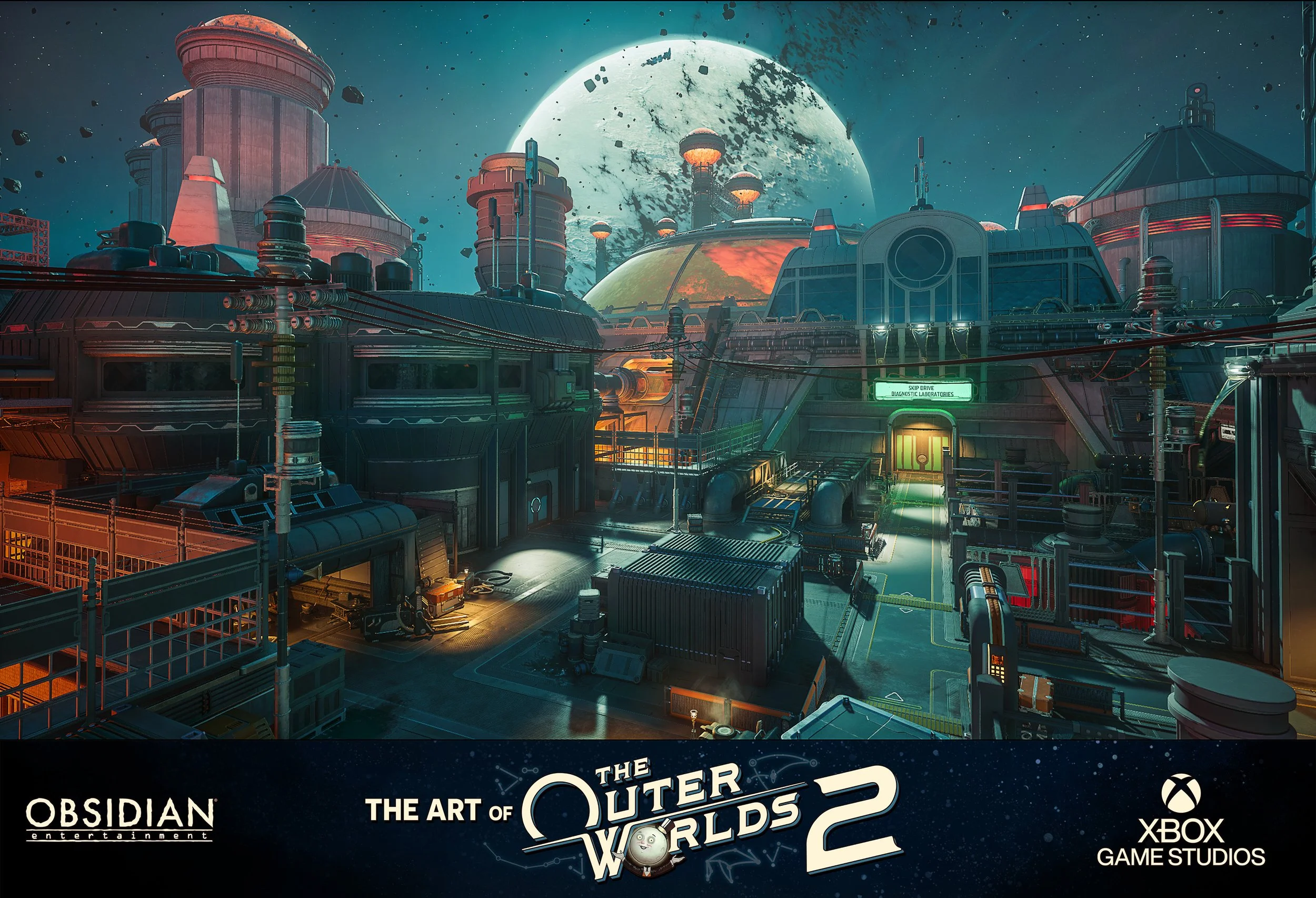
First look of the station upon exiting the Docking Bay. Security Ops (Left), Central Dispatch (Right), and the Skip Labs (Distant Center)
Cinematic conversation with your fellow agents to determine who is taking which objective.
Consideration: Framing
Since the tutorial is the player’s first moments with the game, it’s important to make a positive impression quickly. Much like writing, I needed to ensure we had a strong hook. While a lot of this “hook” is based around the story, it was my responsibility to use the design tools at my disposal to aid this effort.
I worked closely with the environment artists to ensure a strong composition when getting our first glimpse of the level. The player is pulled into a cinematic conversation where the ultimate goal can be seen in the background, while the camera pans between the signs on their left and right, with the respective POIs framed directly behind them to maximize association.
Consideration: Pathing & Pacing
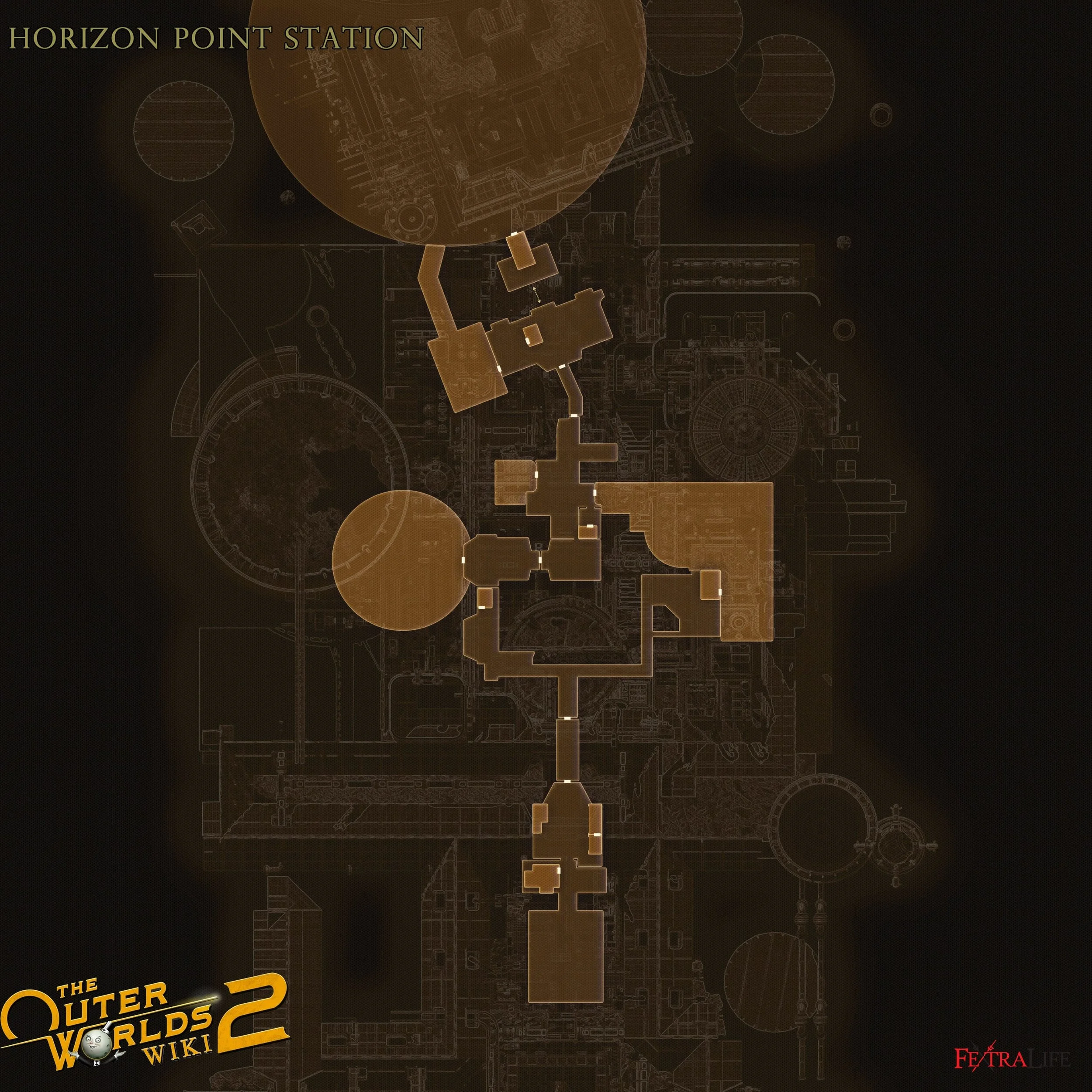
Top-Down map of Horizon Point Station
One of the challenges of the tutorial was packing in tons of exposition in order to set up our story, while simultaneously introducing new players to the game’s systems and mechanics. This required careful planning on my part to ensure all the information players needed was provided in a way that felt intuitive and digestible, without creating an hour-plus long tutorial. This was a highly iterative process with me spearheaded multiple pathing reworks in collaboration with art, narrative, and my lead, in order to ensure there was no information overload, excessive pop-ups, or narrative beats that felt disjointed from the gameplay being tutorialized. The biggest issue I identified during our functional phase was that we simply had too much gameplay space between POIs that was leading to an inclination to add more content and served to only confuse playtesters on where to go next. My solve was to begin cutting out large swaths of gameplay space, creating negative space with plasma pools, piping, and machinery in this vista art spaces. This helped support our narrative that the research facility was powered by the plasma it was sourcing from the moon, in addition to helping us restrict gameplay space to the critical path with more directed opportunities for side-content and exploration.
Exterior exit from Security Ops
Consideration: RPG Options
The Outer Worlds IP and Obsidian philosophy is all about allowing players to play the way they want. After all, what is a role-playing game if you’re not allowed to role-play as the character that’s fun for you? It was vital that in the tutorial I set the tone for how much the game would allow you as a player to express your skills, traits, background, and gameplay style when engaging with the world. This meant carefully planning out interactions across all POIs in the level to ensure we had even coverage throughout player routes, while still having those routes feel distinct and lean into their respective stealth vs combat identities.
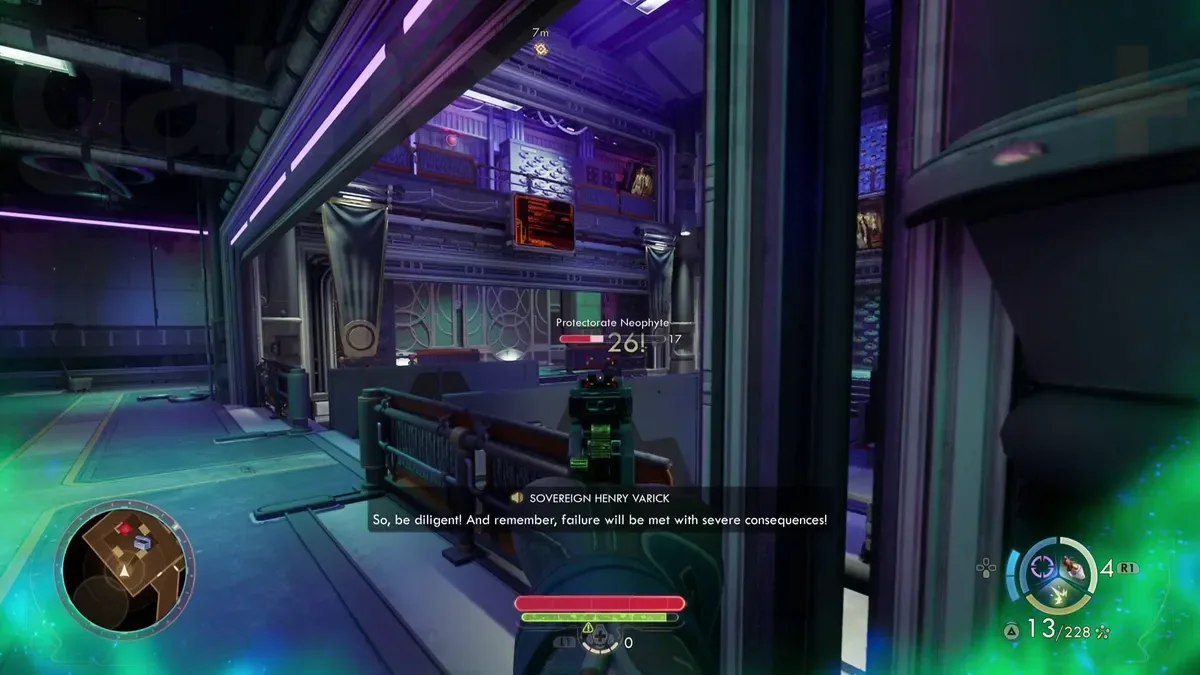
Central Dispatch controls displaying the Sovereign’s message to employees. Players may either shut off the comms tower to prevent reinforcements from being called, or flood the station signal with propaganda.
RPG Examinables are used often throughout the Outer Worlds 2 and are a great way of introducing a variety of unique ways to interact with an object based on a player’s build. These examinables are created and themed at the discretion of designers like myself so it was important to me to integrate a handful of these examinables throughout the levels for players to become acquainted with their function and feel rewarded according to the way they’re choosing to play.
One of my big initiatives throughout the project was creating video monitors that could be turned on, off, to stand-by, or play a slide-show of configurable 2D images controlled via our conversation system. By adjusting the UVs on our consoles and via the power of BP inheritance, I was able to turn anything into a monitor! This allowed me to give players the option to use the Innovation trait and Hack skill to insert a Earth Directorate propaganda cartridge into the controls of Central Dispatch in order to begin playing a propaganda video on loop throughout the station, confusing the Protectorate guards.
An RPG Examinable allowing players with Engineering or Innovative to gain a targeting module that would allow them to turn hostile automechanicals to their side later in the level.
Consideration: Tossball Cards
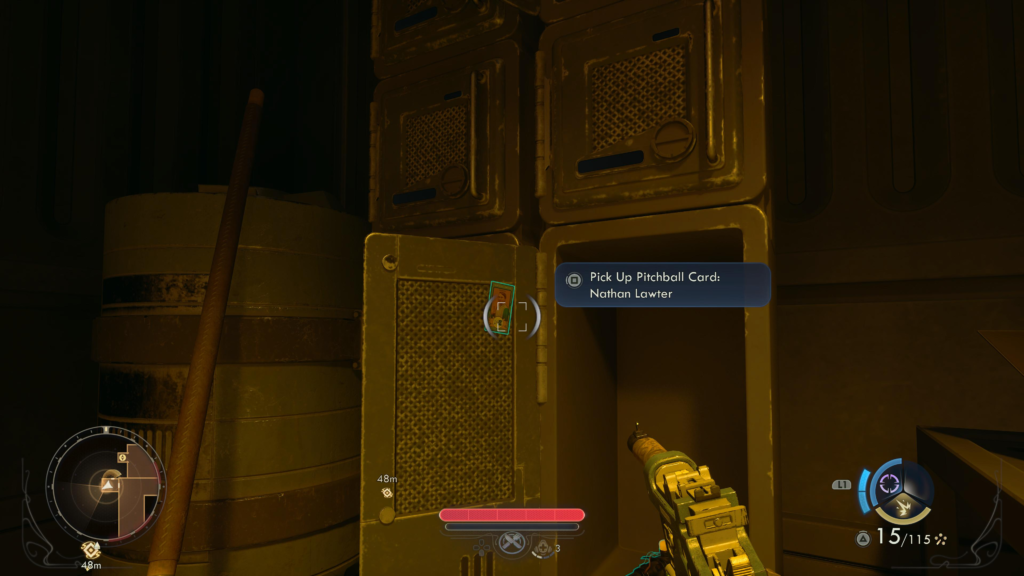
My tossball card in Horizon Point Station. It can be found in the locker regardless of the route chosen.
While I was responsible for placing over half of all of our tossball cards throughout the entirety of The Outer Worlds 2, I had the honor of being able to have my card be one of the first to be acquired. Tossball & Pitchball cards are in-world sports trading cards that contain the portraits of all of the developers who worked on the games. These cards give small permanent stat bonuses to players and are a collectibles sometimes integrated into quests.
Placing the tossball cards may seem like a small and mundane task, but it meant the world to me. Our developers worked immensely hard on this game and these cards are just a small way we pay tribute to their efforts in a public-facing way. I did my best to place cards in locations befitting of the developer, while remaining challenging to find in order to make players feel rewarded when they came across one. So if you happen to give the tutorial a try, make sure you check every locker for lil ole’ me!